In Cibitoke province (Burundi), the situation was shocking: only three hospitals and 47 health centers for a population of 718,907. On the occasion of the World Day for Cultural Diversity , we want to share how AMU addresses emergencies like malaria and the lack of drinking water through cooperation based on listening.
There were many possible paths to implement a water project. But AMU chose the one that has always been most in keeping with its DNA: dialogue, cooperation, respect for local culture, attention to needs, and listening to their concerns through the full involvement of local communities.
The way to implement all this was simple and complex at the same time. Simple: it required participatory action, starting with the people themselves, listening to their stories. Gilbert , a father of four, said in 2022: “The main problem here is water. We suffer from many diseases due to the lack of drinking water and hygiene.”
World Day for Cultural Diversity: Listening to Needs in Burundi
The stories of that land – between the municipalities of Mugina and Rugombo – were all the same: hours of walking to reach a river from which to return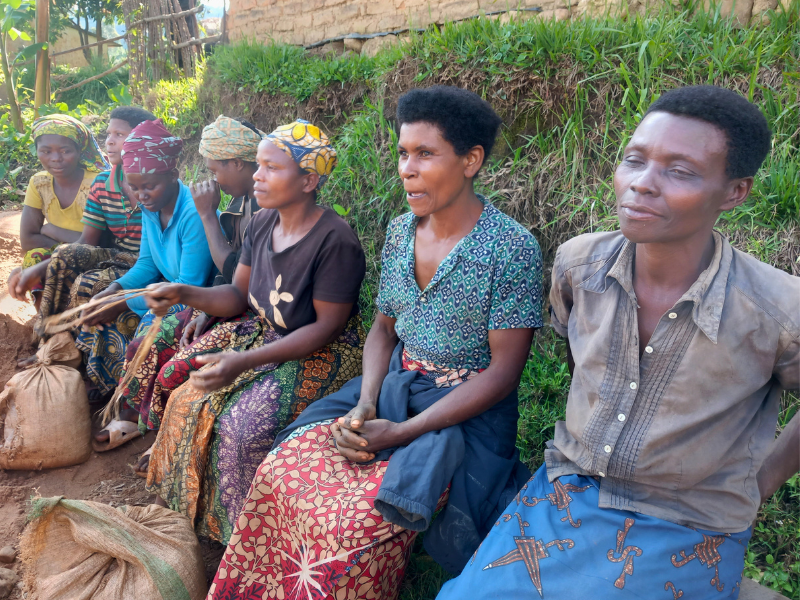 With a canister full of water on their heads and shoulders heavy with fatigue. Gilbert, Esperance, Eucapie, men and women who had—and have—the right to change.
Not a prepackaged change, to be exported into their lives as if it were a help conceived elsewhere. But a process developed together, in which respect for communities was a resource to be valued, not an obstacle to be overcome.
For this reason, together with those same communities, the real needs perceived at different levels were identified and it is from there that the “Water: Source of Life and Development” project was built, which aims to bring drinking water and sanitation to the villages along the Rubirizi–Rukana route, where currently no one has access to a safe water network.
Cooperation and promotion of local traditions
Euphrasie, Evelyne, and Jeanne are just some of the women who wanted to participate in the construction of the aqueduct, as part of the project. They did so by working on various construction sites: they transported heavy materials and sieved sand. They acquired new skills, which allowed them to contribute significantly to the family income.
The presence of women is one of the elements that has allowed us to build a shared vision of the process of change necessary for community development. Here too, as in all other AMU projects, local traditions and ancestral knowledge have been respected and integrated, considering them a valuable resource from which to build.
Dialogue for the World Day for Cultural Diversity and Development
This is one of many examples we could offer today, on the World Day for Cultural Diversity for Dialogue and Development. It’s a celebration to which we feel a profound sense of belonging: dialogue and development are at the heart of every idea underlying our projects, and above all, they are the pillars on which Living Peace International , the peace network that now spans the globe, is built. Patiently built over the years, it now sees more than seventy global organizations sharing peace initiatives and actions on each of the five continents.
Global citizenship education programs are now a feature of all AMU projects—from Ecuador to Syria—because dialogue between different cultures continues to be the only effective tool for preventing conflict and building lasting peace, which flourishes when the richness of each people is welcomed and valued.