
As part of our “Ripartire” project in Uruguay, the social reintegration of prisoners involves practical training. We spoke with Commissioner Nicola Piegro, director of Unit 18 of the National Rehabilitation Institute (INR) in Durazno
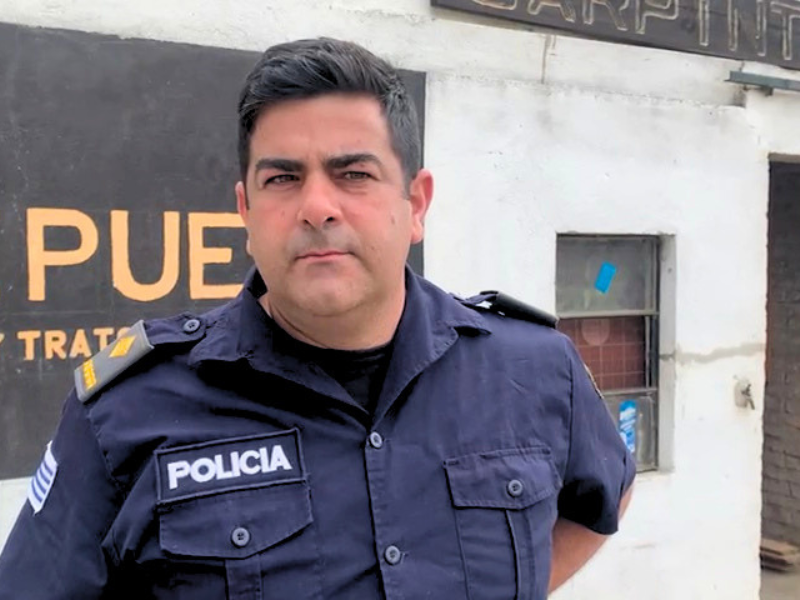 Commissioner Piegro, can you present this reality to us?
In this facility, we house 230 inmates undergoing rehabilitation. Our goal is to ensure that these opportunities for social reintegration become a reality, just as is happening with this carpentry course.
How many courses are currently active at the National Institute of Rehabilitation (INR) in Durazno?
I can’t give a fixed number, because the courses change throughout the year: one ends and another begins immediately. I’ve been in this role for a few months and have found it to be a very dynamic unit; we move seamlessly from one area to another, for example, from gastronomy to other technical activities.
What do you think of the carpentry course supported by AMU?
It’s an excellent initiative. We have a good number of people deprived of their liberty who have access to this training. It’s an experience that helps them tremendously, both for life inside the institution and, above all, for their future reintegration outside.
How many inmates, both men and women, participate in this course?
We try to limit groups to a maximum of fifteen people, to ensure that everyone is properly supported and receives real and meaningful training. professional.
What is the future goal of this course? 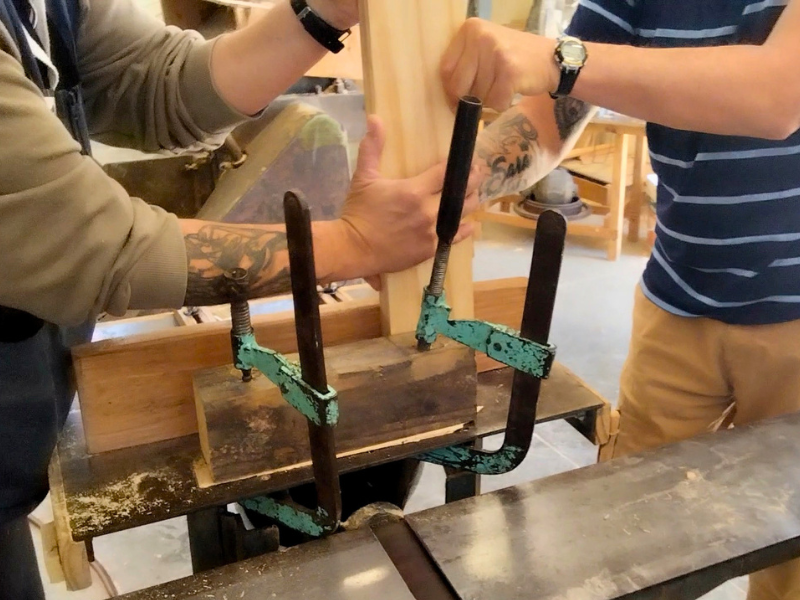
For this machine to continue functioning, in addition to the diploma, it is essential to guarantee the raw materials and ensure continuity of the work. The idea is that every person deprived of their liberty can advance their craft and production, perhaps by creating products useful to society or preparing for external employment.
Looking at participation in courses of this type, what changes do you particularly notice?
The key aspect is that, once they are authorized to participate, individuals break away from the condition of “detention” itself. They dedicate themselves to agricultural or artisanal work, and this strengthens the judge’s trust in them, because they demonstrate responsibility during these supervised releases, acting under the institution’s authority but in a different context.
So it’s a window to the outside world. How do participants respond to these activities?
Very good. Every time they leave for training, every diploma they earn, a profound sense of pride is evident. It’s a fundamental step forward for their reintegration into society.