
In Syrian cities like Homs, employment remains a daily challenge. After years of conflict, the country faces a profound energy crisis , which, combined with a fragile economy, minimizes opportunities and makes the cost of living unsustainable. Those with skills and enthusiasm often struggle with a lack of basic resources even to start or maintain a small business. Without a stable income, vulnerability increases, and forced migration becomes the only way out for many.
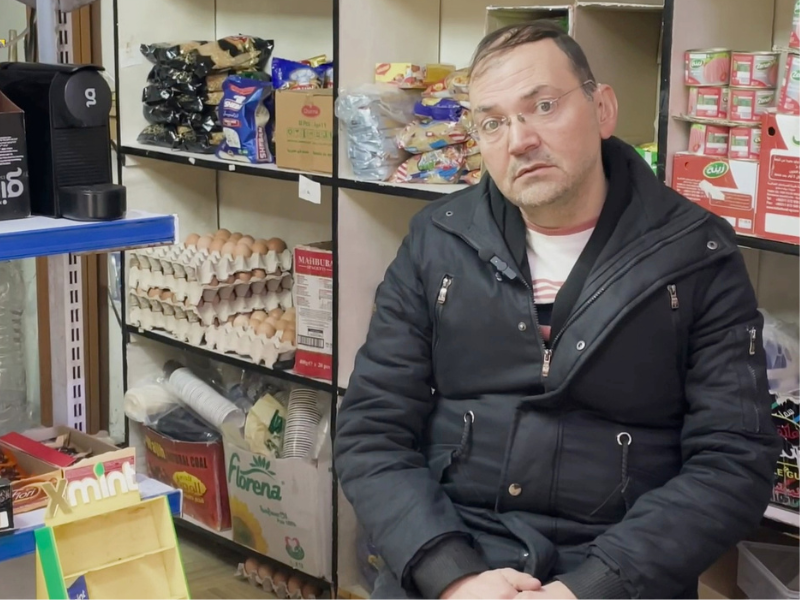
Fadi Samaan—one of the protagonists of our RestarT project—has faced these challenges in his daily life. But, with our support, he has changed the lives of his family and the entire neighborhood where he lives. This is his story.
The shop in the Al-Hamidiyah neighborhood and the challenge of the energy crisis
Fadi lives in the historic Al-Hamidiyah neighborhood of Homs. In 2016, he opened a small grocery store, quickly becoming a point of reference for his neighbors, as his was, and still is, the only shop on the street.
However, running a business in Syria means facing the direct consequences of the energy crisis : the near-total lack of electricity. Without constant power, it’s impossible to keep food fresh or operate machinery. Under these conditions, earning a living wage to maintain a decent standard of living becomes nearly impossible.
Through the RestarT project, Fadi was able to access support for the installation of a solar energy system . This project has radically changed the way his shop operates, regardless of the season, whether hot or cold: in the summer , solar panels provide the electrical continuity needed to power the refrigerator, allowing him to sell and store ice cream and refrigerated baked goods. In the winter , the electricity powers the espresso machine, making his shop the only place in the neighborhood where residents can enjoy excellent hot coffee. 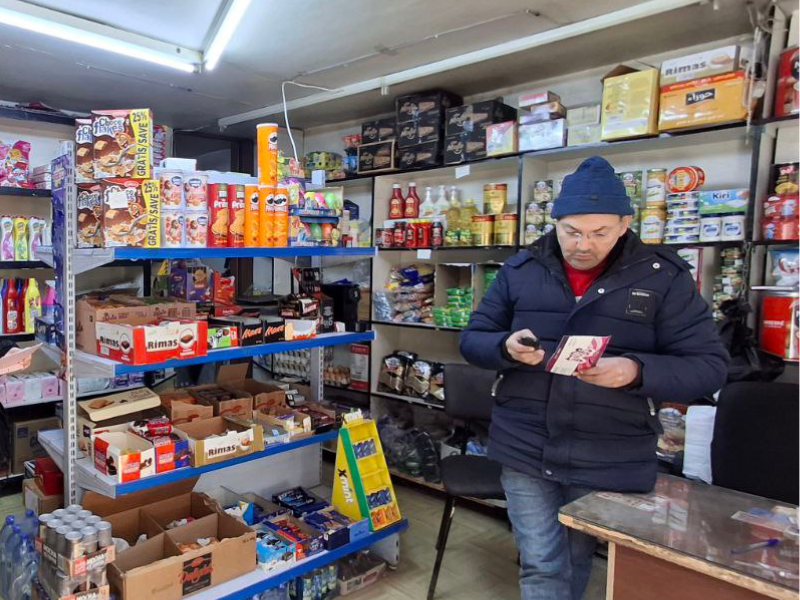
“I’ve benefited enormously from the solar system, and my business has grown significantly. Revenue has increased, and the number of customers has grown thanks to the ice cream refrigerator and espresso machine.”
— Fadi Samaan
With the Reciprocity Fund, aid multiplies
What makes the RestarT project unique is the principle of restitution and solidarity . The program uses a circular mechanism: each beneficiary returns 50% of the cash contribution received, resources that go into the fund to finance other income-generating activities. The other 50% is returned to the community in the form of social responsibility.
In keeping with these values, Fadi has chosen to donate a portion of his monthly earnings to a local church-linked charity. Thus, in the face of the energy crisis paralyzing Syria, his small neighborhood shop has become a beacon of hope and dignity.