
In areas where economic insecurity, social fragmentation, and violence threaten daily life, sustaining community processes over time is a profound challenge. Weak social bonds, a lack of opportunities, and constant exposure to risky environments directly impact children, adolescents, and young people, as well as the elderly, who are often relegated to the margins of the community, eroding collective trust and a sense of the future. In this context, it is rare to find experiences capable of bringing together multiple realities and sustaining truly lasting collective responses. However, the experience of the Network of Ecological Clubs of the Canton of Muisne, launched on January 10, 2020, demonstrates that when caring for life is organized as a network, it can become a strategy capable of protecting the territory, rebuilding bonds, and opening horizons of hope.
The uniqueness of this experience lies not in its claim to be exceptional, but in the concrete way in which it has been able to organize, grow, and sustain itself over time.
Ecology that unites generations
Its strength stems from a shared understanding of caring for life in all its aspects, understood not only as protection of the natural environment, but as a social action that connects people, communities, and the territory , enabling different generations to interact. In this way, older people themselves regain an active role within the local fabric. From this perspective, ecology becomes a daily practice, capable of generating belonging, co-responsibility, and meaning .
Deep Roots: A Local Response
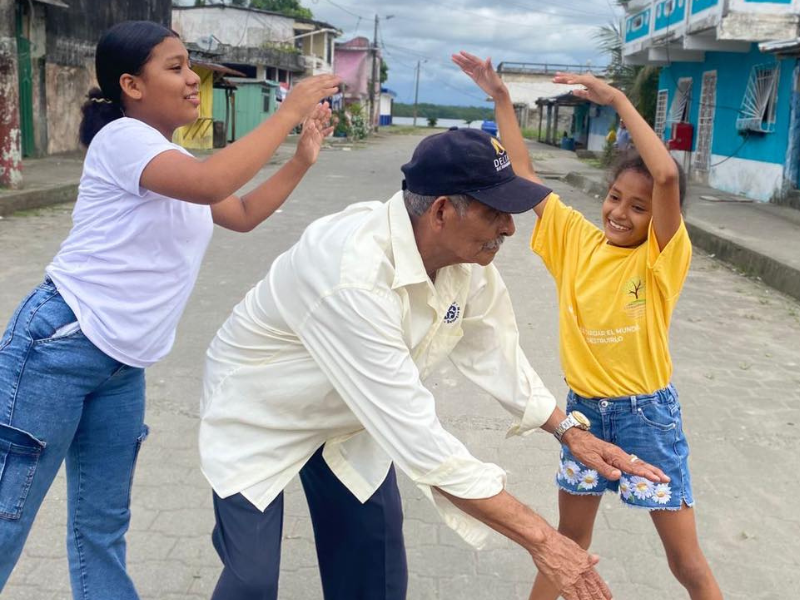 The Network was born from the initiative of local leaders who, faced with situations marked by social exclusion, fragile family ties, and dynamics of violence, decided to open spaces of care and protection for the community . This was not a top-down proposal nor an isolated intervention, but a response generated by a deep knowledge of the territory. This endogenous nature was fundamental to its sustainability.
Since its inception, the Network has strengthened its collaboration with decentralized autonomous governments, local non-governmental organizations, and schools, consolidating a shared responsibility approach that has allowed it to expand the scope of its actions and sustain processes over time. Thanks to the testimony and commitment of local leaders, the proposal has been embraced by as many as 12 communities, generating a multiplier effect based on trust and mutual recognition.
Ecological Clubs as a “community family”
In this context, Eco Clubs have consolidated themselves as safe spaces, where environmental care becomes a concrete form of social and human assistance. The Network’s humanitarian impact is expressed not only in the number of activities carried out, but in the rebuilding of bonds that serve as a true community family. This bond is particularly significant for children, adolescents, young people, and the elderly, who find support, recognition, and protection here, rediscovering their usefulness, value, and motivation.
The numbers of change: the impact between 2020 and 2025
Between 2020 and 2025, the network supported long-term community environmental action, managing to collect 1,334.32 tons of waste and plant 41,786 trees . Extraordinary results were achieved through community mingas , reforestation days, awareness campaigns, and daily best practices for responsible waste management.
These activities were complemented by ongoing training programs , which combined environmental commitment with learning about co-responsibility, community organization, and land stewardship. Furthermore, local livelihoods were strengthened through training courses in entrepreneurship and basic accounting, supporting the development of sustainable production initiatives through the provision of small capital. 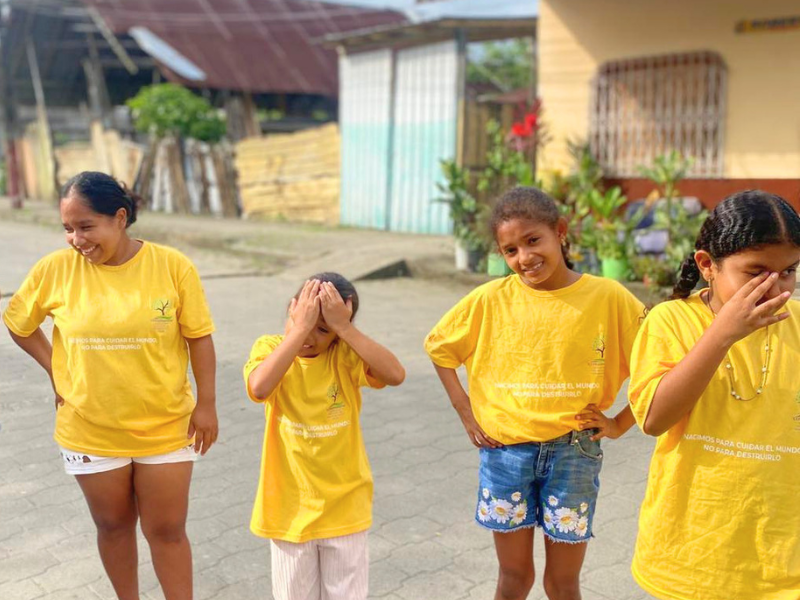
One of the most significant effects of this journey has been the progressive transformation of the participants’ life horizons. In contexts where completing high school was already an extraordinary achievement, new aspirations related to university education and more dignified and informed life plans are now beginning to emerge.
While structural challenges have not disappeared, community spaces have helped challenge individualistic dynamics, strengthening self-esteem, social engagement, and a deep sense of shared purpose.
Brotherhood and care for social transformation
This experience is based on deeply shared values, especially brotherhood and a sense of family. Brotherhood is experienced as a daily shared responsibility , while the family dimension allows the network to function as a true extended family for the entire community, where each person is recognized as valuable in the care of the collective.
The journey of the Network of Ecological Clubs of the Canton of Muisne demonstrates that caring for life, when grounded in fraternity, ceases to be a slogan and becomes a concrete practice of protection, dignity, and hope. Organizing as a network has not only allowed for care of the local area, but has also rebuilt human bonds capable of sustaining life even in the most challenging contexts , offering a valuable key to viewing community care as a real and legitimate strategy for social transformation.
Fabian Quintero, from the Ecological Clubs Network