
The construction of the new water network in Cibitoke province (Burundi) is bringing about a transformation never seen before in this region. The lives of those who have participated in the project are also benefiting from this positive wave of local development in Burundi . This is all thanks to the Water: Source of Life and Development project, launched by AMU , in collaboration with its local partner CASOBU , and with the support of the Italian Episcopal Conference (CEI) . Since the beginning of the project, 2,159 people have already been mobilized, employed as laborers with regular contracts and decent work .
Construction site, new skills and new perspectives
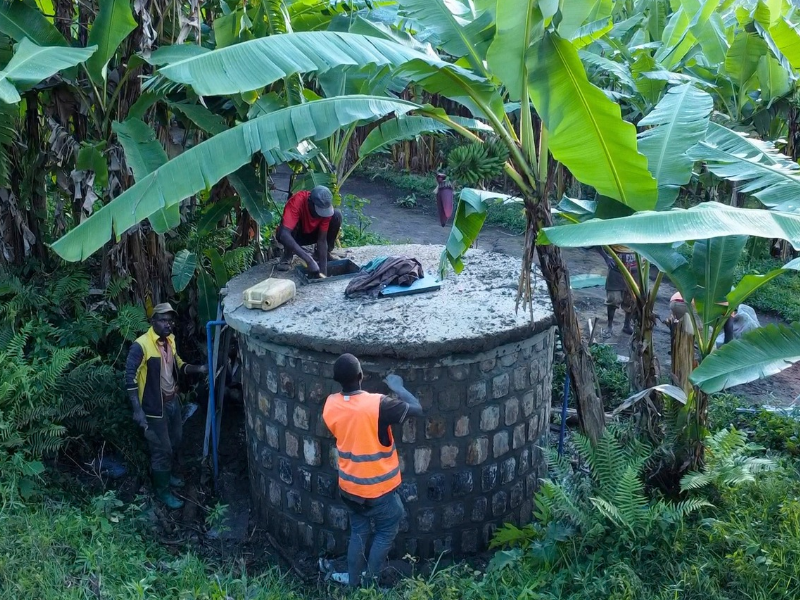 The workers – men and women – participated in particular in preparing the land, digging trenches, laying pipes, recovering old structures and building new infrastructure to ensure access to drinking water .
There’s one factor that’s rarely discussed in these cases, but which is just as important as water distribution: the professional training and new skills acquired by each individual.
For Venant Haragakiza, the construction site was an opportunity to learn, especially in concrete preparation and pipe assembly. The money he earned allowed him to buy a bicycle, which makes his daily commute easier. “These are the first fruits of the work done,” he explains, speaking of his purchases. Pierre Kubwabo’s experience highlights another aspect of the construction site.
For him, participating in the construction of the water network is a way to contribute to the development of Burundi and his hilltop community. Beyond the salary, the driving force was the desire to participate in a collective project that meets a vital need of the population. The communities involved agreed to get involved, investing in their own sustainable social and economic development .
A new horizon for women’s emancipation
Women also contributed to the construction sites, marking a significant step forward for female inclusion . Recruited primarily as laborers, they assisted the construction workers in their daily tasks, thus participating in the construction of the water infrastructure. Proud to have demonstrated their skills and to have fully participated in an international cooperation initiative that brought about change, Emelyne and Scholastique share what they have gained from this adventure, both personally and as a family.
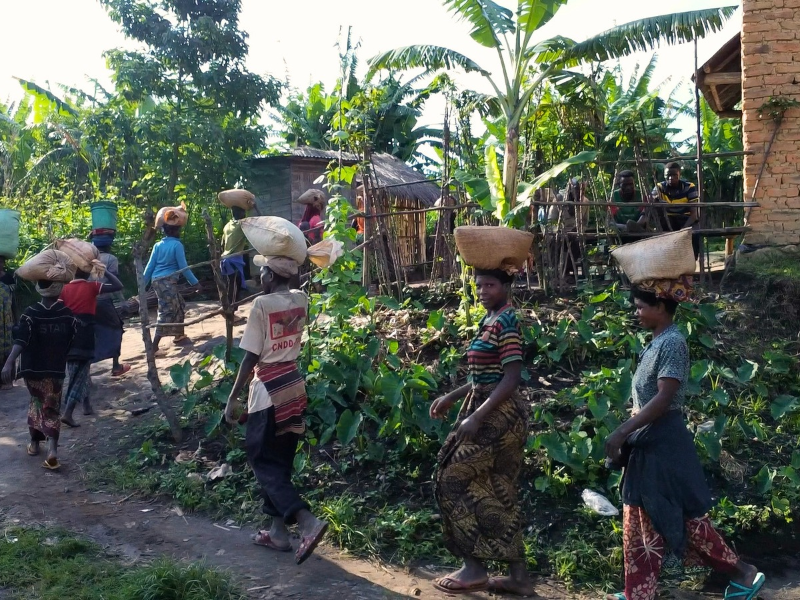 For Nahimana Emelyne, being hired as a laborer represents much more than just an opportunity to earn money: “We are often left aside, even though we are perfectly capable of working. This experience made me feel capable and offered the opportunity to open new horizons for the development of my family.”
Scholastique Nibogora also participated in the work as a laborer, despite some difficulties related to the construction site schedule: “Thanks to this work, the family income increased. I was able to meet some basic household needs and even invested in the purchase of a goat.”
These women, along with all the others who participated in the construction sites in various capacities, saw their abilities recognized—for the first time. This strengthened their self-confidence and made them aware of their professional worth in a sector previously accessible almost exclusively to men.