 The Rubirizi-Rukana aqueduct construction won’t end with the laying of the final pipes. There will be another equally important step to take.
And it’s a challenge that begins—one might say—the day after. Ensuring that drinking water continues to flow clean, safe, and accessible to all, well into the future.
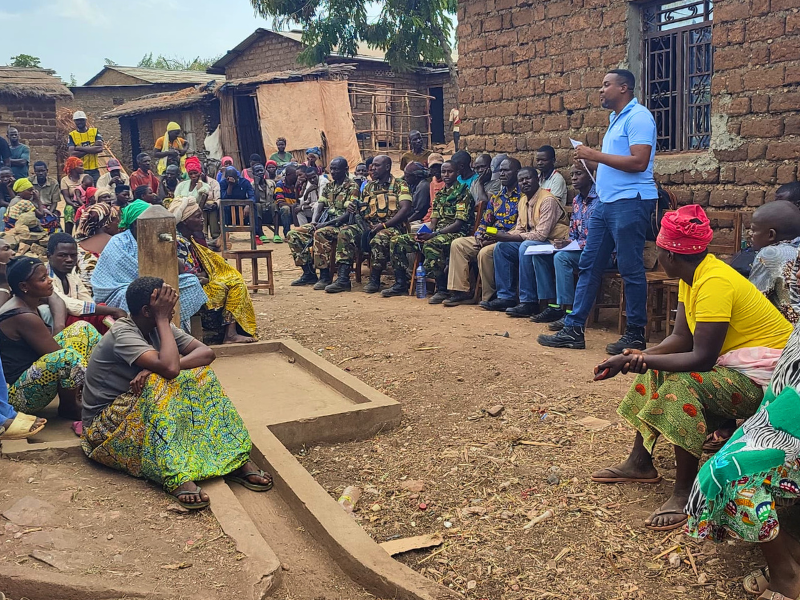
For this reason, the CASOBU team has already launched a large-scale awareness campaign that directly involved the beneficiary communities of five hills: Rushimabarimyi, Rubirizi, Musenyi, Gicaca, and Rukana.
The value of local participation
The meetings with the affected communities were led by community leaders, in close collaboration with local administrative authorities and the project coordination team. The goal was clear: to transfer skills and awareness so that the community itself becomes the primary custodian of the project.
“Water works only last if the beneficiary communities take ownership of them and take care of them.” — One of the community animators said.
Towards the Water Point Management Committees
These moments of discussion and training pave the way for the creation of Water Point Management Committees. These are local bodies, made up of community members, who will be directly responsible for monitoring, managing, and protecting the water infrastructure.
Through the “Water source of life and development” project, thanks to the commitment of CASOBU and the fundamental contribution of the Italian Episcopal Conference (CEI) , we do not limit ourselves to bringing water where it is lacking in Burundi, but we contribute to the growth of a culture of co-responsibility and social cohesion.