Tony works as a painter, a house painter, in Syria, but only while the summer lasts. Then comes winter, and with winter the work gets more difficult, there are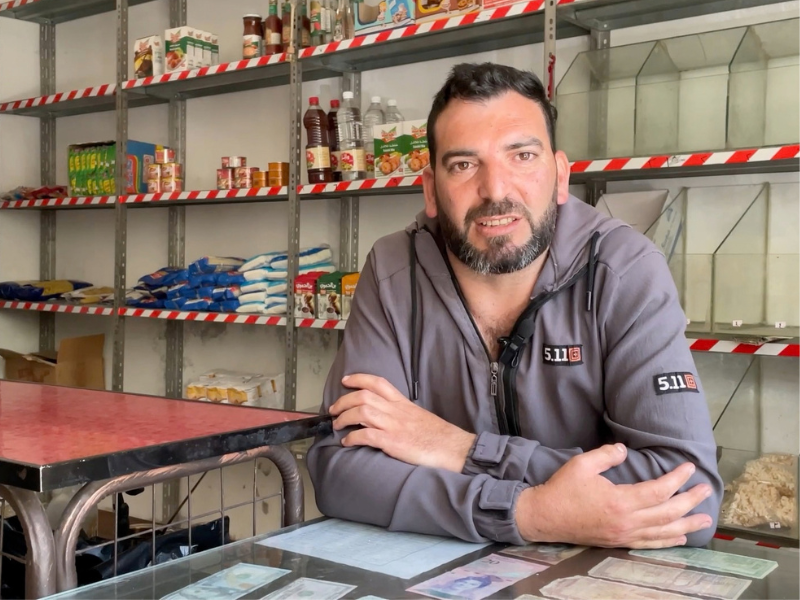 fewer options: “Mine is a summer job, after the season I was idle.” And so he, with two children and a wife, doesn’t give up and invents a small, basic shop.
It is in this capacity for resilience that the true meaning of our international cooperation in Syria lies: not simple assistance, but a concrete opportunity for redemption and autonomy.
He thus receives support from the RestarT program, which provides him with what he needs to start his new small business: the first packages of goods, shelving, and a refrigerator that hums, promising a future.
From support to autonomy: a shop that creates value
Things were going pretty well before; afterward, they’ve gotten much better. People come in, ask questions, buy. And if what they’re looking for isn’t there, Tony grabs a pen and paper, jots it down, and goes looking for it. He restocks, erases gaps, replenishes the shelves. The shop becomes a living cog. 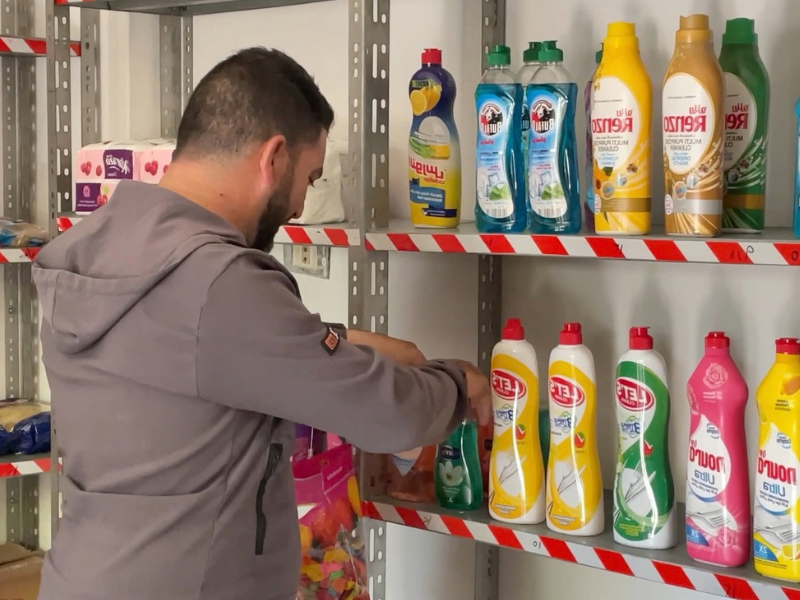
Now the challenge shifts further. He’d like a freezer for ice cream. There are plenty of children around, and no one to sell a cone or a stick.
But to run an engine you need energy that the grid doesn’t provide: and so he started installing solar panels on his roof himself.
RestarT: “a project of love” and reciprocity
RestarT, says Tony, is “a project of love, because it cultivates what some people lack” .
And love demands reciprocity: at every holiday, Tony packs a basket of food and brings it to those less well off than himself. Not an act of charity, but a restoration of dignity. A human value chain that demonstrates how our international cooperation projects in Syria can trigger a multiplier effect in local communities: “I hope that everyone who has received help will help others. I will continue my work until my business grows further. RestarT’s support has strengthened, encouraged, and motivated me.”