
Nora and her husband had been wanting to expand their business for a long time, to take that step forward that could bring them an income.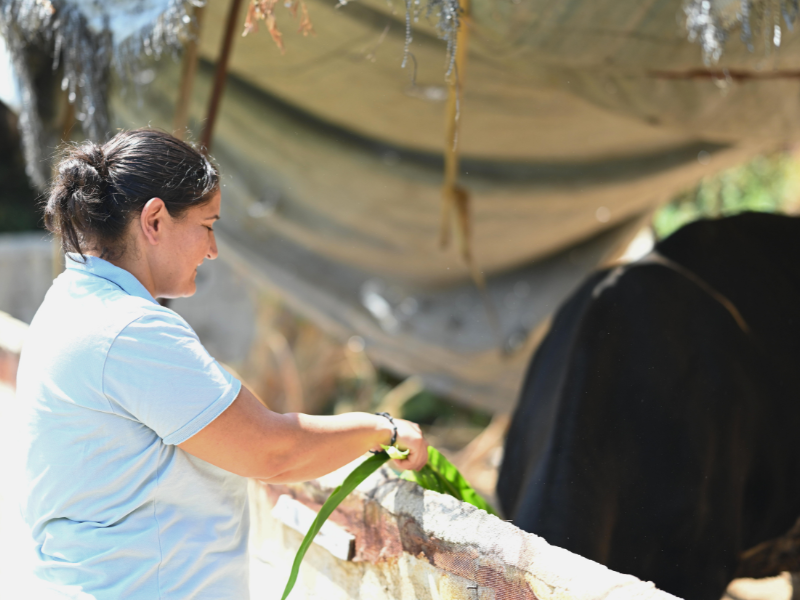 Greater, but also—and most importantly—greater professional satisfaction. Both are aware of the potential of the dairy farm they manage together, side by side, supporting each other from morning to night.
With some moments of tiredness, certainly, but without ever lowering our gaze from the goal: buying more cattle to produce more milk.
The farm is located in the Al-Bassatin area , in the city of Baniyas, where many of the protagonists of RestarT live, the microcredit project with which AMU supports small income-generating businesses in Syria .
The arrival of Jouhara
One day, almost by chance, Nora heard about RestarT while attending her parish and, after consulting her husband, she decided to 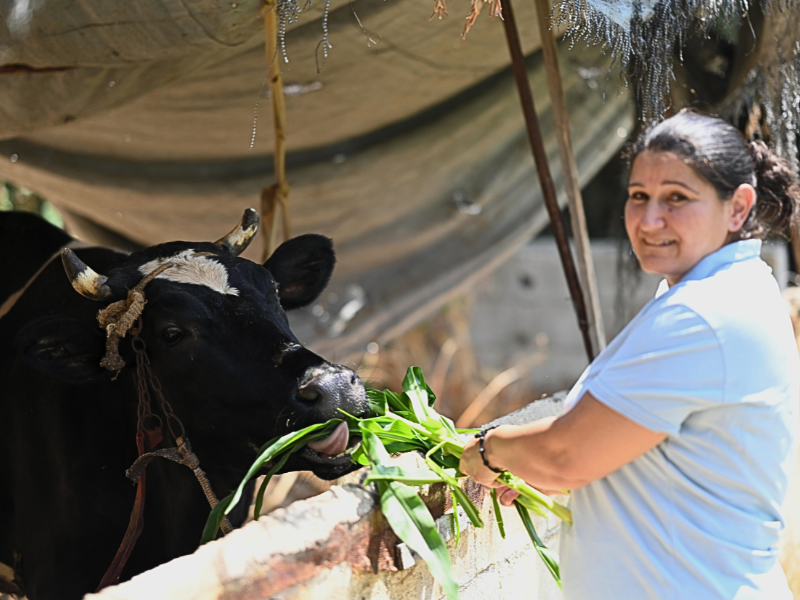 apply. The application was granted, and Jouhara, a new cow purchased with the funding received, entered their farm (and their lives).
This seemingly small innovation had a major impact on the management of the family farm, as the addition of three cows significantly increased milk production.
As a result, the two were able to see the same positive impact on the small business’s earnings, giving them renewed peace of mind when it comes to managing their daily expenses.
Nora and her husband have adopted a precise method for managing their finances: they record their income and expenses in an accounting ledger. Their weekly profits are divided as follows: one portion is set aside for savings, while the other is used for household expenses. The salary earned from another job she holds in Baniyas is entirely dedicated to the education needs of the couple’s only child.
This meticulous organization in the distribution of resources guarantees a certain economic stability and, at the same time, allows the family to plan for the future .
A shared development
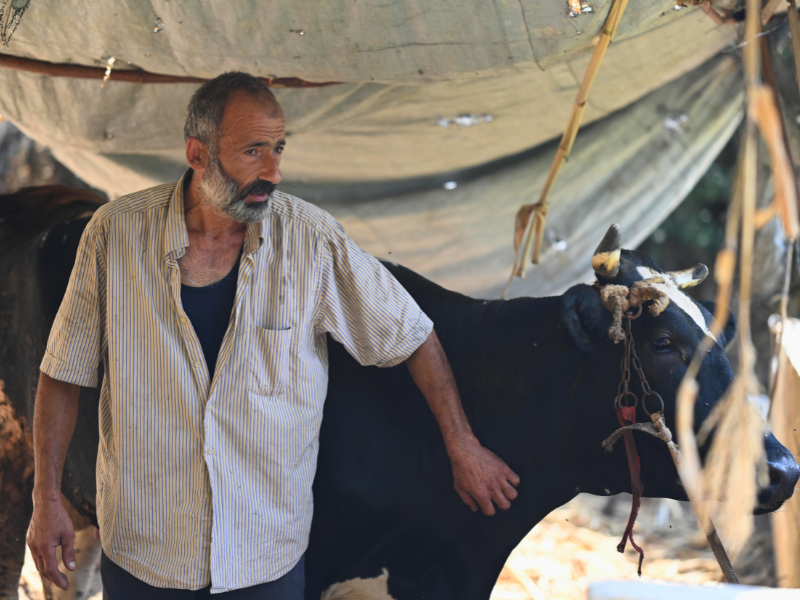 The next step? Nora already has it in mind: she wants to buy a mechanical milking machine to simplify her work and be able to handle a larger number of cattle.
The desire to introduce innovation into their farm to keep up with the times is a clear sign of this family’s modern vision , which, however, is not only focused on personal success.
Every week, the two generously put the reciprocity clause into practice (returning 50% of what they receive from RestarT in cash and the remainder in the form of goods and services to offer to the community): Nora and her husband donate a portion of the milk produced to needy families in their town who have no source of income.
They also cultivate the land adjacent to the farm and share the fruits of their harvest with their neighbors. For Nora, reciprocity is a fundamental principle: “The land bears fruit only if we are ready to share its blessings with others.”