
The value of prevention and health
On this new trip to the province of Cibitoke I went to see up close – among other things – the fruits of the work carried out last year, during which 35 ecological latrines were built thanks to funding from the Emilia Romagna and Friuli Venezia Giulia.
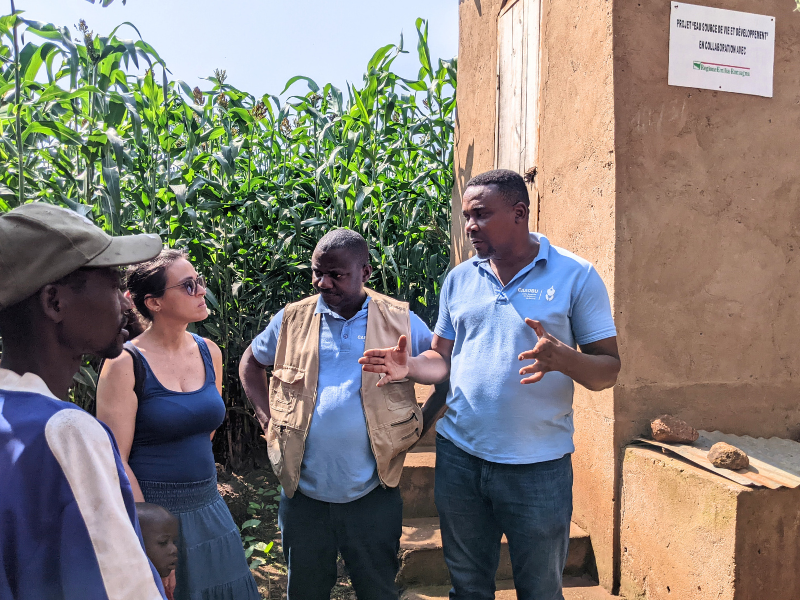 These interventions are often underestimated, but they are actually substantial and very important, because they complement the impact produced by the construction of the aqueduct.
Their role is fundamental in working on prevention and environmental hygiene, as well as in combating the spread of diseases linked to dirty hands or of a gastrointestinal nature.
Typically, in fact, latrines consist of simple holes dug in the ground around houses: a condition that unfortunately contributes to the high mortality rate among children aged 0 to 5.
An ecological model for the environment and agriculture
The ecological latrines we have refined over time and built with the “Water: Source of Life and Development” project aim to protect the environment and groundwater, providing a direct benefit to public health. But there’s another very interesting aspect: the economic impact on families, thanks to the agricultural use of organic fertilizers produced by these types of latrines.
The organic materials are collected and stored without water, with the addition of ash, and—after three to six months—can be reused as fertilizer. It’s a system that allows every family to produce a highly effective fertilizer at no cost.
Surprising results: the vigor of the plantations
This was perhaps the first experience in which I had the opportunity to return a year later, to the same places, 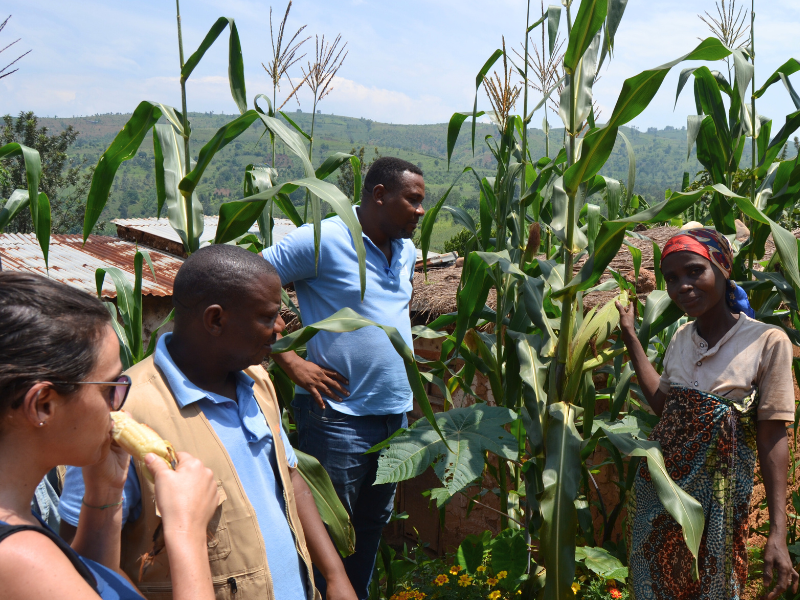 to verify the results and speak directly with the beneficiaries. I must say that the difference compared to the neighbors’ land was immediately obvious: the corn plants were much more lush and tall, with giant cobs.
Stories from those who cultivate these fields have confirmed that using the collected urine as a fertilizer has produced excellent results, and its use in plant protection has also helped protect the plants from insects.
Furthermore, despite a period of severe drought, cauliflowers fertilized with this system survived, weighing up to 5 kg; while those of neighbors died because they could not withstand the high temperatures and lack of water.
The birth of reciprocity in the community
The families who benefited from the construction of ecological latrines were selected by local administrations to bring 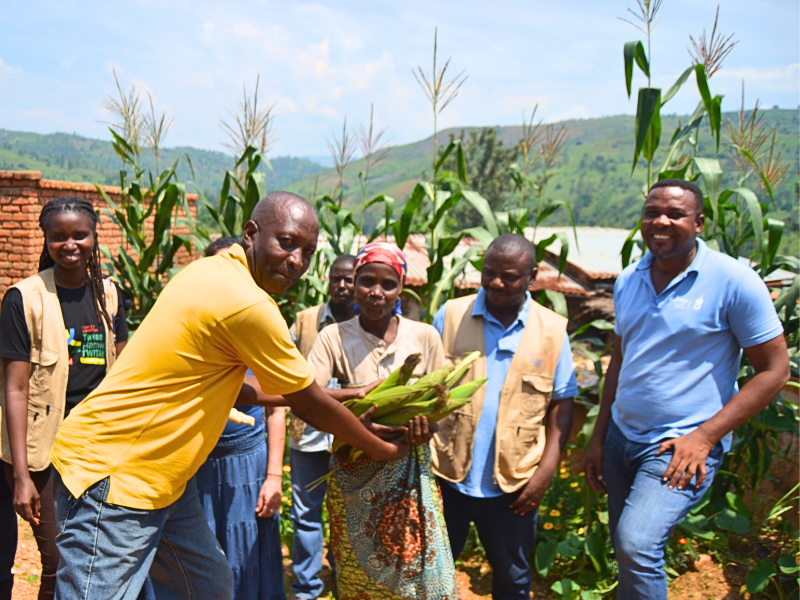 carry out a pilot project, receiving the latrine free of charge, as a gift.
While exploring with them the possibility of extending the benefits to the rest of the community, we noticed something truly positive: that is, a spontaneous sharing of fertilizers with neighbors was already emerging.
Our idea is to encourage this sharing: those who receive a latrine help others increase agricultural production by giving them some of the fertilizer produced, so that their neighbors can also save money to build their own ecological latrine in the future.
We found an unexpected availability and a great desire to support each other. This is certainly an excellent response for our project .
Emanuela Castellano, AMU project manager in Burundi