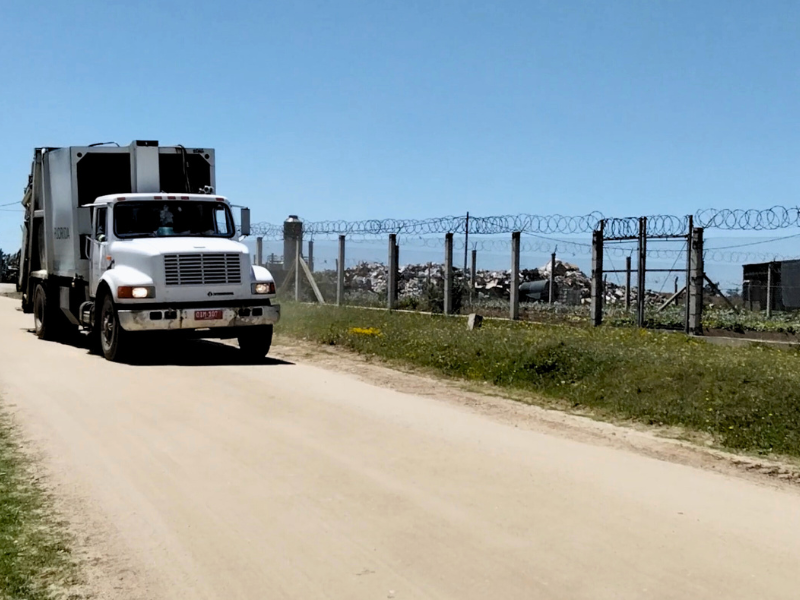
 One of the things that struck me most when I entered the Florida prison in Uruguay was a specific scene: the garbage truck unloading next to the rehabilitation institute.
It seemed like a metaphor for a behavior we are trying to counter today: giving people new opportunities for social reintegration and not simply “discarding” them because they made a mistake.
It wasn’t just a mission. It was a learning journey within the prison environment and the challenge of social reintegration.
Uruguay, a country of contrasts
In mid-2025, Uruguay reached a new record: 477 people deprived of liberty per 100,000 inhabitants. Approximately 0.4% to 0.45% of the population is incarcerated, a figure that places the country first in Latin America in terms of the number of prisoners per capita. Yet it is an exception: it invests more than other countries in the region in prison rehabilitation.
The common factor that leads so many people to stray from the path is drugs. It’s a phenomenon that in recent years has affected not only Uruguay, but almost every country in Latin America. This contrast has accompanied me throughout my mission: on the one hand, culture, organization, legality, and community; on the other, the pain and frustration of those easily drawn into drug use and sale.
The impact with prison
The two prisons in the departments of Florida and Durazno are located far from cities, in isolated locations; in one case, even near a landfill. Upon arrival, the watchword is “security”: from document checks to constant surveillance by prison staff. The spaces are all fenced off with fences that separate the areas.
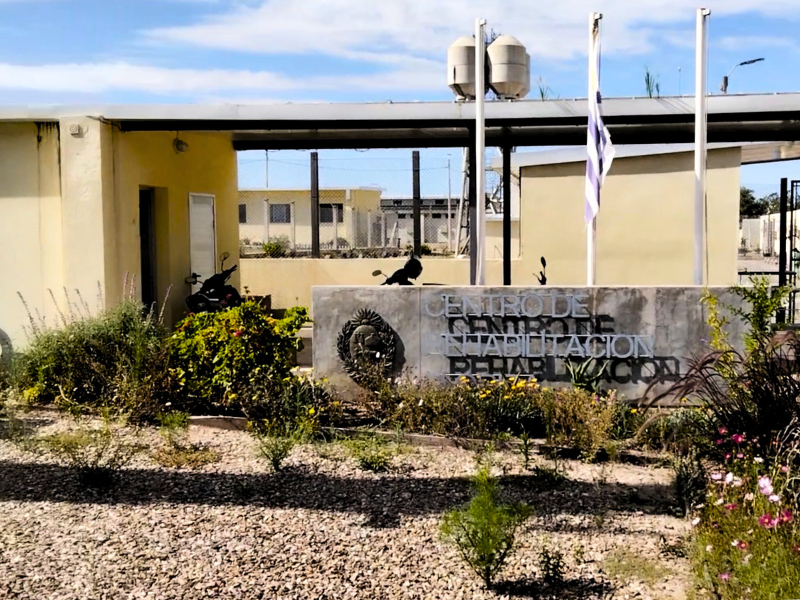 These two centers are among the best in the country, being designed for people who have committed minor or, at least, not very serious crimes . Outside their cells, many perform services such as cleaning common areas, working in the garden, or in the laundry.
When we arrive, everyone looks at us with great curiosity; they greet us willingly, but with a slightly provocative tone, almost as if testing whether we’ll return the greeting. We’re immediately seen as “professors” of something: after all, most people who come from outside, whether from public institutions or NGOs, do so to offer some form of training. Despite the place being called the “National Rehabilitation Institute,” it remains an environment marked by tension, control, and a punitive approach; this constantly contrasts with the various activities carried out within, aimed at truly humane and sustainable social reintegration.
It is in this context—with its evident ambiguities—that I arrived with colleagues from the El Chajá association, our local partner.
The “Restart – Social Reintegration” project
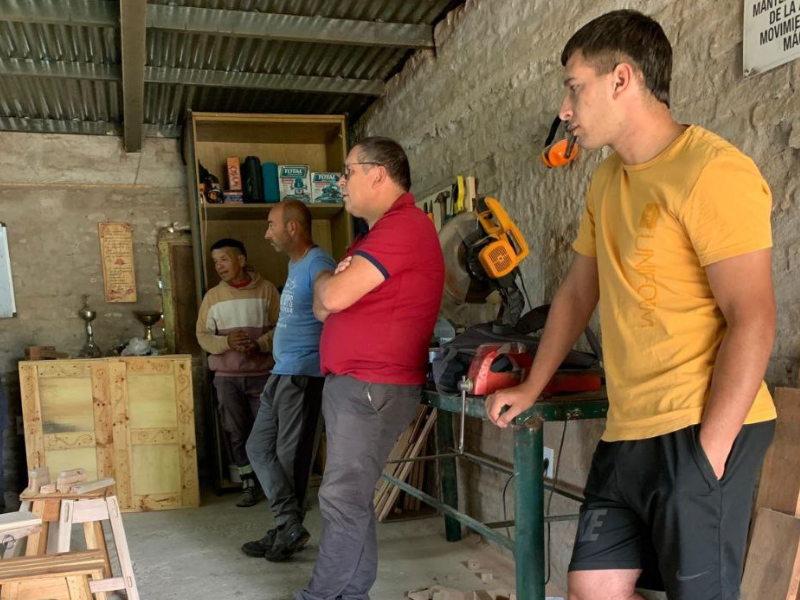 I visited the two centers while some of the activities included in our “Ripartire” project were taking place: the carpentry course and the psychological support session.
I was struck by how much people embraced the offer of these two spaces, particularly the psychological support offered by the “Escuela de Psicologia Sociale del Uruguay – EPSU.” It seemed as if the offer had arrived “like water in the desert.”
A detained girl told me:
“I never left my cell except for my cleaning shift; I wasn’t interested in any other activity. But when they mentioned this space, I immediately said yes. Even though it wasn’t easy at first, I always wanted to be there. It was worth it.”
During the carpentry course, when we asked the participants some questions, we found a particular atmosphere : they were playful, shy, at times almost incredulous.
Many of them repeated:
After the psychological support course, we found ourselves doing carpentry together. What made us happiest was that, after having experienced such profound and powerful things together with the psychologists, we found ourselves as friends again. We’re doing something we enjoy, and at times it doesn’t even feel like we’re in prison.”
I was able to observe this change even during the closing of the course on emotional management tools . It was incredible to see how people accustomed to appearing strong and tough became almost childlike again, starting to play with play dough.
Something simple but powerful
In the midst of a huge problem like drugs and social exclusion, I saw something simple yet powerful: when you give people tools, they use them. And when someone believes in them, they start believing in themselves.
Lia, Head of Development Cooperation at AMU