The Musenyi basic school (in Burundi, the basic school lasts nine years and coincides with the Italian primary and lower secondary school) is one of the three that will benefit from drinking water when the construction of the water network foreseen by the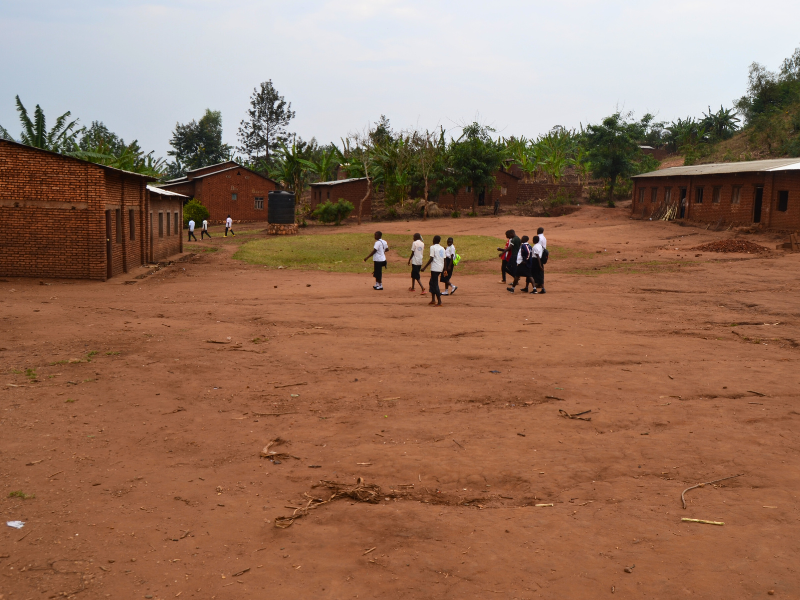 Water, source of life and development project that AMU is carrying out in the province of Cibitoke together with the local partner CASOBU and with the support of the CEI (Italian Episcopal Conference ).
Now that the new school year has begun , the anticipation is great.
Everyone—students and teachers—is aware of the radical change that the arrival of drinking water will bring to this school community.
For this reason, entering the classroom was different than usual.
What it’s like to live at school without drinking water
This school has over seven hundred students . Since its founding in 2000, it has never had access to drinking water. To get it, students must fetch it from the Nyakagunda River , a three-kilometer walk away. The water they collect from the river is then used for cooking, washing hands, and cleaning classrooms.
According to the teachers , “school life is turned upside down.”
Jean-Marie is a sixth-grade teacher and grew up on Musenyi Hill.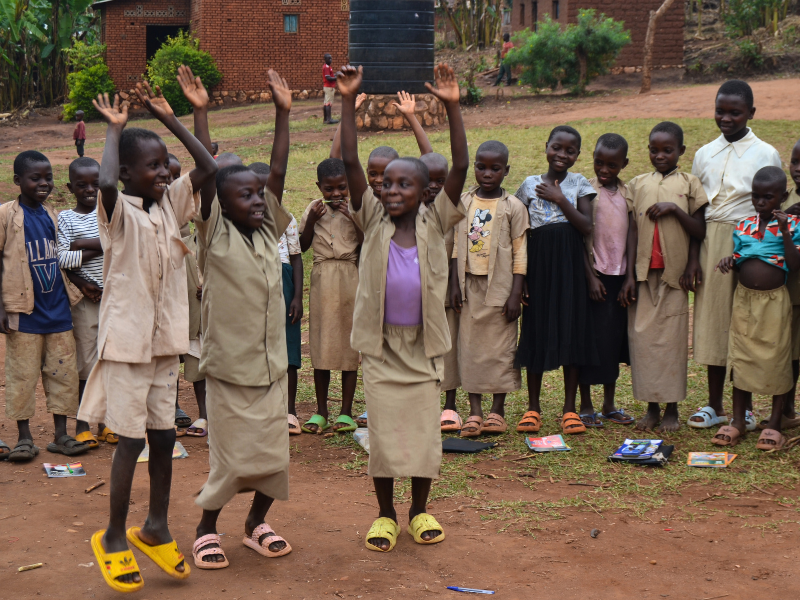 He says: “I’ve been attending this school since I was in elementary school. Back then, there was no drinking water. Then I became a teacher, but the situation remained the same. There was a rainwater harvesting project, to avoid having to walk to the river, but it didn’t last long.”
Another teacher at this school, Bernard, adds: “During recess, the children go looking for water; at the end of the break, I find myself in front of half the class, because the other half is still out looking for it.”
The lack of drinking water affects several aspects of school life. The school has a cafeteria, but students often eat without being able to wash their hands .
Poor hygiene encourages the spread of certain diseases. Added to this is the “effort required of parents to fetch the water needed for the canteen,” which disrupts family activities.
When the Ruburizi-Rukana aqueduct is finished
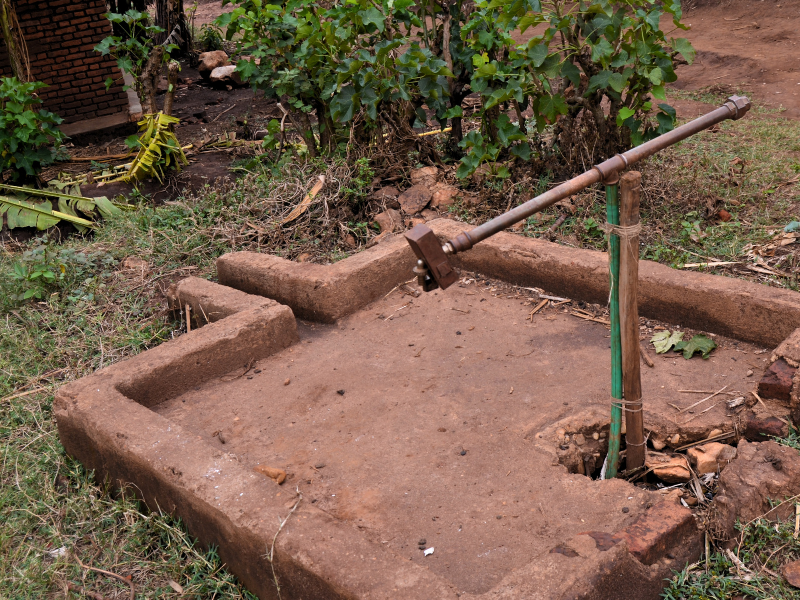 When drinking water flows from the fountains in front of the classrooms, the change will be enormous, tangible, and will herald a series of benefits never before enjoyed. The boys and girls who walk through the school doors every day await that moment with a mixture of hope and wonder.
Trésor, third grader: “I can’t wait! I’ll be happy to drink clean water.” Delicia, eighth grader: “Knowing we’ll have drinking water nearby will make us feel more relaxed and focused on our studies.”
Many teachers share these expectations: “When water is available, children will live better. We hope that hygiene will improve, illnesses will decrease, school lunches will function more smoothly, and parents will be able to go about their daily activities.”
In short, the Rubirizi-Rukana aqueduct that AMU and CASOBU are building – with the support of the CEI (Italian Episcopal Conference) – will be a vital project for the development of these communities.