On June 26, a significant step was taken to support children’s education in Ecuador , specifically in the Canton of Muisne. Thanks to a unique synergy between environmental protection and education, complete kits of school supplies were distributed by members of the “Greta Fucame” Ecological Club , part of the Red de Clubes Ecológicos (Network of Ecological Clubs), supported by AMU through the Sunrise+ project.
Who are the children receiving educational support in Ecuador?
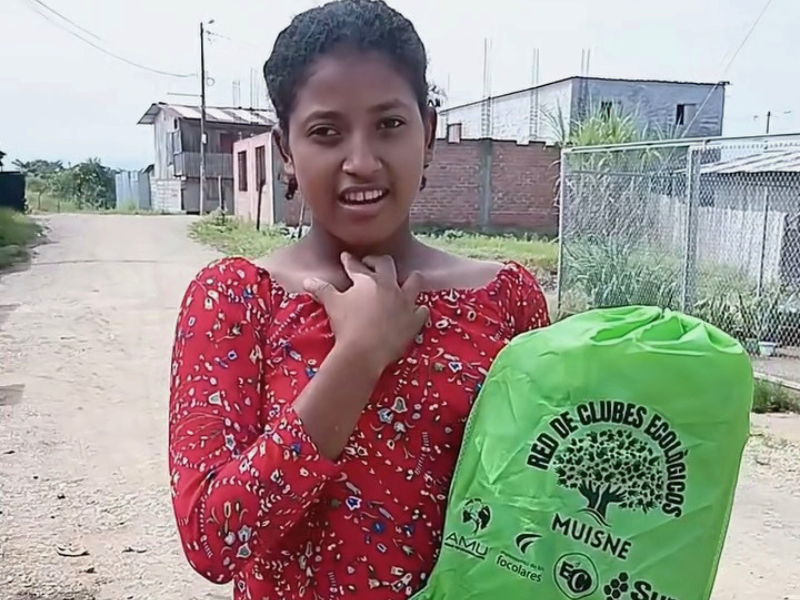 The protagonists of this day were the children of the families of the area’s traditional shell collectors and fishermen . These families have ancient origins, and their survival is closely tied to the mangrove. Indeed, it could be said that they themselves have been custodians of this endangered plant for generations.
Mangrove forests are considered among the most precious ecosystems on the planet, but unfortunately they are also among the most threatened. The reasons are multiple, and linked to both direct human activity and the climate crisis.
The threat of factory farming and the role of custodians
One of the main causes of mangrove destruction is shrimp farming . Large swaths of forest are razed to make way for artificial ponds for the industrial farming of shrimp and fish for export. Furthermore, the massive use of antibiotics, pesticides, and chemicals in these ponds pollutes the surrounding waters and alters the water balance of the entire area.
Protect the right to education and ensure educational support for children in Ecuador – especially children of oil pickers
shells and traditional fishermen – therefore means protecting the ecosystem itself.
Conserving the mangrove goes hand in hand with the well-being of its people. Ensuring these children have the materials they need to continue learning and attending school means sowing the seeds of the future .
Supporting their education today means training the adults who, tomorrow, will continue to protect this vital ecosystem for the planet.