The Water, Source of Life and Development project in Cibitoke Province (Burundi) is no longer just a project to rehabilitate water infrastructure: it has also become a true social revolution that is redefining the role of women within their communities.
In a context where access to drinking water is a daily challenge, some women have chosen to become an active part of the solution, acquiring professional skills and making a crucial contribution to the construction of the new aqueduct.
The role of women in the construction of the aqueduct
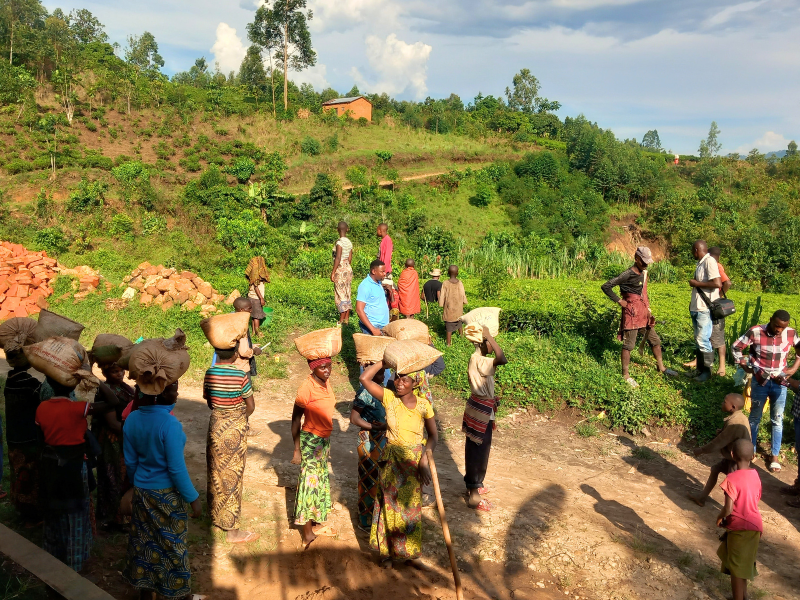 Euphrasie, Evelyne , and Jeanne are just some of the women currently working in Burundi as bricklayers’ assistants on various construction sites currently underway for the rehabilitation of water systems.
Their contribution is essential: they transport heavy materials like cement, sand, and gravel, and are responsible for sifting the sand and mixing the mixes. For these women, participating in the work is proving to be invaluable, and has multiple implications.
They are acquiring new skills in the construction sector; they are contributing significantly to family income ; and they are building a network of direct collective participation to ensure access to drinking water for all. The project’s success is also thanks to them.
We’ve collected some of their voices. Here they are.
Voices from the construction site: the value of women’s work
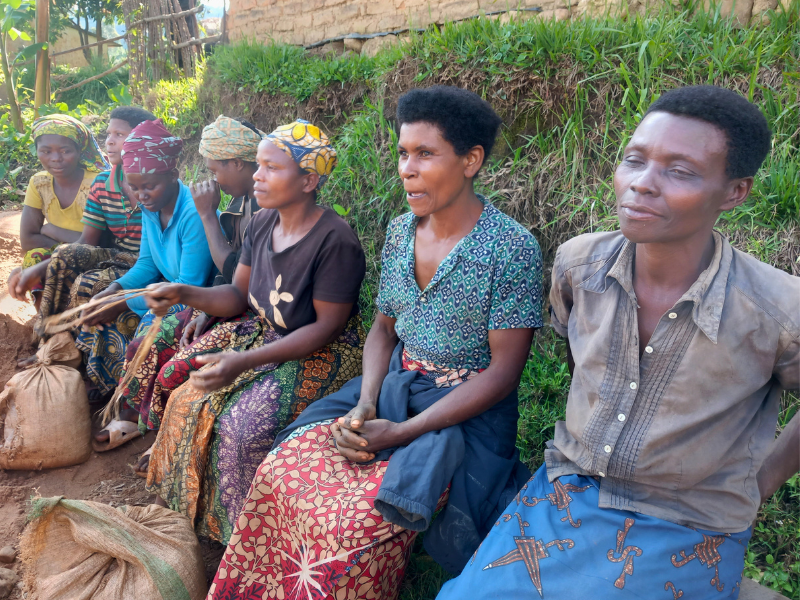 For Euphrasie, one of the key aspects is the financial opportunity : “We started work in Gifunzo, then continued on to the water source catchment site. We transport cement, sand, and gravel. It’s a valuable financial opportunity for us.”
Evelyne explains that her motivation to participate was born from her admiration for the commitment of the workers, who did not spare themselves despite the difficulties: “We welcomed the project. What most motivated us to participate was the commitment of the workers on the construction site… we felt called to join with others and participate collectively in order to have access to drinking water.”
Jeanne emphasizes the importance of the training and inclusion that the initiative has allowed: “Most of us have gained new practical knowledge in the construction field. We’re very grateful for this initiative to integrate women into the workforce on these jobs: it’s an opportunity we never could have imagined.”
A future built together
These testimonials confirm that the project is generating jobs for women in Burundi, providing tools for female empowerment, vocational training, and sustainable community development. These alone are excellent results.
(The project is being implemented by AMU in close collaboration with its local partner CASOBU, with the fundamental support of the CEI – Italian Episcopal Conference)