
Brazil is a country deeply marked by high levels of economic inequality, whose roots date back more than a century: it was one of the last countries to abolish slavery, and this process was implemented without a plan for the social, economic, and political inclusion of Black people.
Racism: an ancient problem that persists in Brazil
 More than 130 years after the abolition of slavery, Black people continue to face discrimination, violence, lower wages, and the lowest labor market positions.
The Beiru-Tancredo Neves community (Brazil) is mostly composed of people of Afro-descendant origin.
Those who live here report that racism is more present than ever and is expressed through the constant institutional violence of the police, but also through the lack of public investment in healthcare, education, leisure, and civic participation.
Violence and unemployment
Violence is a complex issue to deal with in this area, and is especially prevalent in the suburbs. Rivalries between drug gangs, debts of drug users, and disputes between addicts are among the main causes.
Unemployment is also linked to violence: many people are unable to find work, and the need for an income increases the tendency to commit crime.
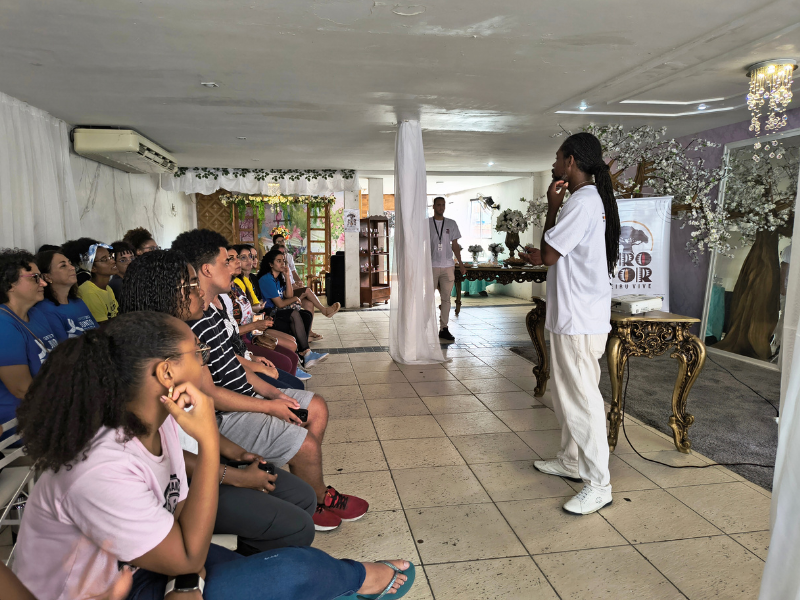 From early childhood, many children and young people grow up immersed in environments marked by violence.
Drug trafficking and militias become places of recognition and personal affirmation for them, as well as a source of income sufficient to cover basic needs.
PROFOR: program for strengthening inclusive communion activities
It is in this context that the third cycle of PROFOR was born: a program for strengthening inclusive communion activities involving the Beiru-Tancredo Neves community, in the province of Salvador (Bahia), in northeastern Brazil.
It is an incubator for income-generating initiatives that operates along three main axes: encouraging personal growth with a particular focus on entrepreneurial skills; offering a learning path on techniques for managing socially impactful businesses; and training entrepreneurs in the use of microcredit, inspired by the culture of the Economy of Communion, which proposes a new way of thinking and doing business to promote positive social change.
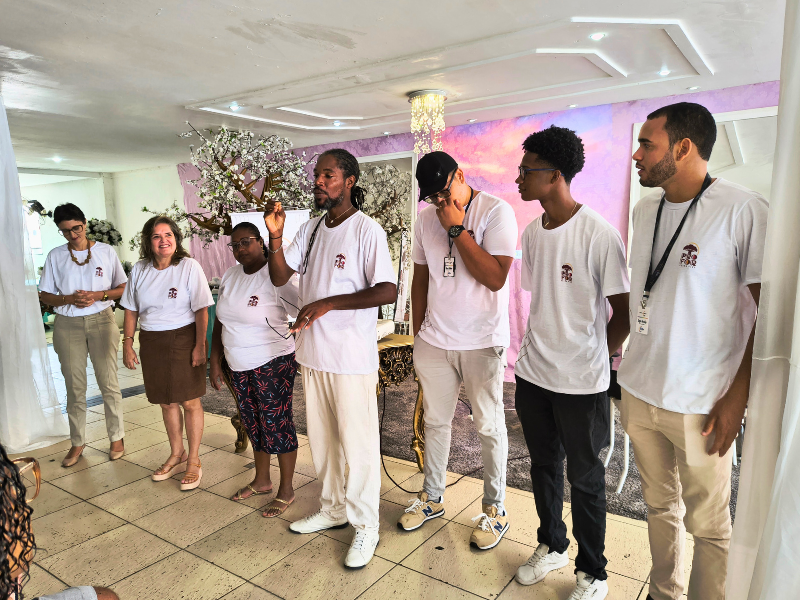 In 2016 and 2019, AMU, together with ANPECOM, supported the incubator to promote awareness, personal and professional growth, and valorize Black culture and its contribution to social prosperity.
It is necessary, first and foremost, to address vulnerable people and provide them with access to entrepreneurial education. Twelve local businesses will undergo a year of training with industry experts, thanks to a collaboration with the Aliança Institute, the project’s technical partner.
The goal is to ensure that these activities reach a level of maturity sufficient to generate a positive social impact and contribute to change in this Brazilian community.