The familiar, comforting aroma of coffee wafts through the air as soon as Munir opens the door to his shop in Aleppo. And when he takes a handful of roasted beans and carefully pours them into a grinding machine, he’s simply performing a ritual familiar to those who work in this profession, and one that Munir himself repeats to perfection. The crisp sound of the beans sliding into the grinder is a kind of promise for those who live in Aleppo today .
In the background, behind him, the neat shelves display packages of coffee and other products. Anyone looking to buy a good blend can come here—to Aleppo—and will find a kind man behind the counter who has made a dream come true within these small walls.
A coffee grinding machine
“I worked in a travel agency, and I owned this place, but unfortunately I didn’t have the money to buy the raw materials and the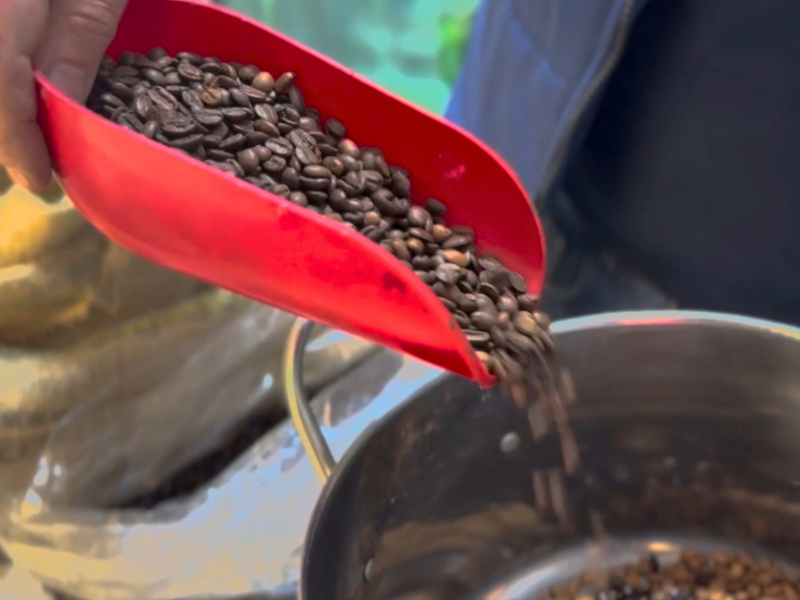 “The tools needed to open this shop, as I’ve wanted for a long time,” Munir recalls now, as he picks up a grain that slipped out of his hand and fell to the ground. He’s wearing a padded blue jacket, because it’s cold in here and in Syria, in Aleppo today , it’s difficult to get a little heating.
Evidently, his dream had a solid foundation to make it a reality, as the RestarT team in Aleppo deemed it worthy of support. The first thing to arrive at the shop—provided by the program—was the coffee grinder. Then, everything else: “Once the materials were received, the business was up and running!”
Munir leveraged his business experience, gained after years of working in a travel agency. And he left nothing to chance: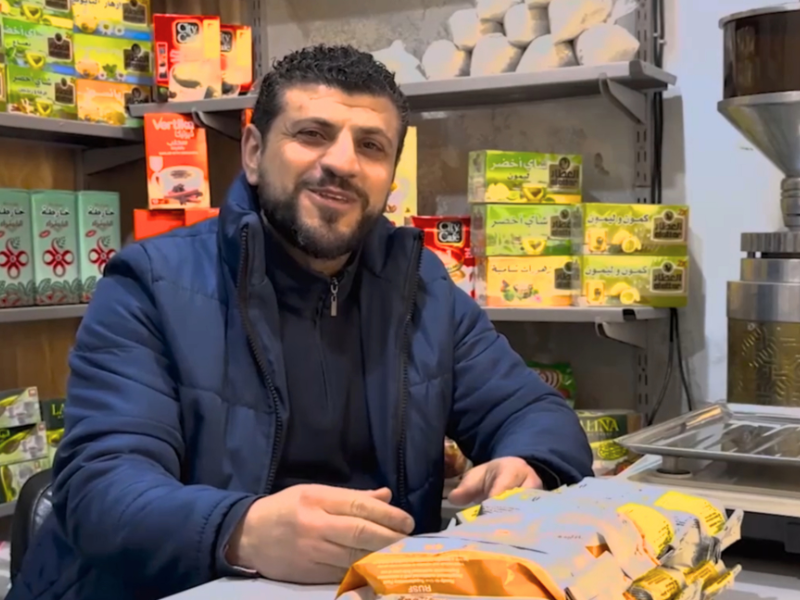 “I started to observe my customers’ needs and, based on that, I created new coffee blends that they would like. I also introduced new products that I didn’t have at the beginning.” When the first profits came in, he purchased a refrigerator, always useful in a shop.
Resisting Aleppo today
The last period has been a rollercoaster for the shop and for Syria, following the offensive that led to the fall of Aleppo in November 2024 and the fighting that erupted in the city. Munir had to close for a while, and his income stopped: “Luckily, I had a small savings account that served as a guarantee during the downtime, and which allowed me to buy food and pay the installment for the loan obtained from RestarT.”
Reciprocal microcredit repayment
Those who receive a microcredit from RestarT commit to repaying the support received in two complementary ways: fifty percent in cash and fifty percent in solidarity. Or rather, in reciprocity .
Munir himself tells us how he did his part for the Aleppo community today : “I contacted some organizations that take care of the elderly and their needs, and I donated some coffee to them so they could cheer up the guests.”